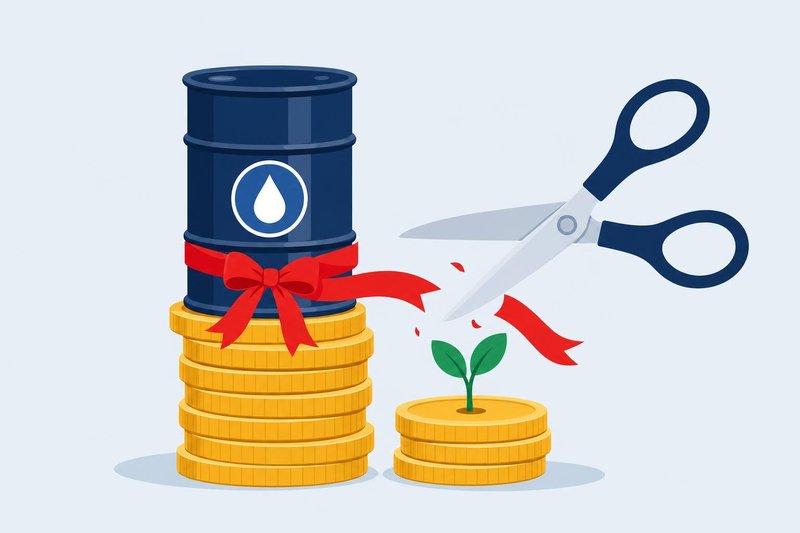
On 1 June 2015 six of Europe’s largest oil and gas companies, BG, BP, Eni, Shell, Statoil and Total, wrote to the United Nations asking governments to put a price on carbon. Four days later an opinion piece in the Financial Times drew the obvious conclusion: if the producers themselves accept that carbon should be taxed, the public money that still lowers the cost of extracting and burning fossil fuels has lost its last defender. That argument sits at the centre of EU fossil fuel subsidy reform, and it explains why the EU record on fossil fuel subsidies is judged so harshly. The tax level for carbon could take years to settle. Ending subsidies could start the next morning.
It did not. More than a decade later the same subsidies are still being counted, reported and promised away.
Why ending fossil fuel subsidies in the EU was a settled question by 2015
The international commitment predates the oil companies’ letter by six years. At the Pittsburgh summit in September 2009 the G20 leaders agreed to phase out, over the medium term, inefficient fossil fuel subsidies that encourage wasteful consumption. The European Commission turned that into a procedure in 2011. Its Roadmap to a Resource-efficient Europe, COM(2011) 571, asked every member state to identify its most significant environmentally harmful subsidies using established methods by 2012, and then to prepare plans and timetables to phase them out and report on them in the national reform programmes sent to Brussels each April under the European Semester.
The reasoning is short. An environmentally harmful subsidy lowers the price of a product or service below its true economic cost, whether through direct payments to producers, lower consumer prices, under-taxation or a mix of the three. A subsidised litre of diesel or tonne of coal competes against wind, solar and efficiency investments that receive no such help. Removing the support levels the field without any new spending, which is why the measure tends to appear in every list of low-cost climate policies.
The scale was set out by the International Monetary Fund in 2015. Its study Counting the Cost of Energy Subsidies put global fossil fuel subsidies at €4.77 trillion for 2015, or 6.5% of world GDP, and found that eliminating them could cut global CO2 emissions by more than 20%. A side note on method: the IMF figure is a post-tax measure, counting the health and climate damage that fuel prices fail to reflect alongside budget transfers and tax breaks. That is why it dwarfs the OECD’s inventories of budgetary support and tax expenditures, which count only what governments actually pay or forgo. Both approaches point the same way; they answer different questions.
What the 2015 numbers showed for each member state
The IMF country estimates for fossil fuel subsidies across the EU made uncomfortable reading. In absolute terms Germany led with around €50 billion a year, followed by Poland (€49 billion), the United Kingdom (€37 billion), France (€27 billion) and Spain (€22 billion). Per person, the ranking looked very different.
| Member state | Fossil fuel subsidies per person, 2015 (IMF) | Main driver named in the analysis |
|---|---|---|
| Luxembourg | €3,415 | Very low transport fuel taxes |
| Bulgaria | €2,480 | Support to coal power, about €16 billion a year |
| Czech Republic | €1,522 | Coal |
| Poland | €1,299 | Coal |
| Denmark | €936 | Crude oil, €692 of the per-capita total |
| Belgium | €828 | |
| Lithuania | €697 | |
| Romania | €645 |
Luxembourg is the instructive case. In the second half of 2015 it held the rotating presidency of the Council and so led the EU into the Paris climate conference. Its largest fossil subsidy was the under-taxation of road fuel. Domestic transport accounted for only about 20% of the fuel sold in the country; the rest went into the tanks of commuters and of lorries routing through the Grand Duchy to fill up. Campaigners at the time calculated that the low rates brought Luxembourg about €1,400 per citizen a year in fuel tax revenue that would otherwise have been collected by Belgium, France, Germany and other neighbours. Luxembourg also left coal and coke untaxed, applied discounted rates to LPG and taxed only about 40% of its natural gas use. The Commission’s 2015 country report found that Luxembourg had made no progress on taxing transport energy and that the country was on course to raise its emissions by 3% instead of cutting them by 20% by 2020, a gap of some 23 percentage points.
The Czech figure moved fastest: from about €250 per person in 2011 to €1,522 in 2015. In Bulgaria the coal support helped give the country the lowest electricity prices in the EU, around €0.090 per kWh, alongside one of the highest levels of energy use.
The phase-out reporting duty that no government met
On 26 October 2015 environment ministers met in Luxembourg to discuss progress on removing environmentally harmful subsidies. The background paper for the meeting named transparency, consultation and communication as the conditions for successful reform. A review published the same day by Green Budget Europe, a Brussels NGO working on environmental fiscal reform, graded each member state’s 2015 national reform programme on a scale from 1 (a detailed phase-out plan with a timetable) to 4 (no action visible). No country scored 1. Belgium and France scored 2, Denmark 3, and almost everyone else 4, with Estonia and Portugal unscored because their programmes were not available in English.
The two countries that moved did so through diesel. Belgium announced on 10 October 2015 that it would raise its diesel excise by 4 cents in 2016, another 4 cents in 2017 and 6 cents in 2018. France pledged four days later to close its 17.5-cent gap between diesel and petrol taxes within five years, having already abolished its reduced VAT rate on fertilisers in 2014. Poland’s programme went the other way and explicitly listed continued support, around PLN 1 billion for a crude oil storage installation. The United Kingdom had capped its carbon price support rate at £18 per tonne from 2016–17 to 2020, citing competitiveness concerns while the EU ETS price stayed low.
The diesel story has its own detail worth following: the tax gap between the two fuels is also a climate question, covered in the analysis of why diesel cars are worse for the climate than petrol.
Production subsidies and the G20 promise
Much of the debate in Europe concerned consumers: cheap fuel, reduced rates for industry, exemptions for farmers. In November 2015 the Overseas Development Institute shifted attention to the supply side. Its report Empty promises: G20 subsidies to oil, gas and coal production was the first to document the scale and structure of public support to fossil fuel production across the G20, through national budgets, state-owned enterprises and public finance. Its conclusion was blunt: the money amounted to a publicly financed bailout for some of the largest and most carbon-intensive companies in the world, six years after the same governments had promised a phase-out in Pittsburgh.
Germany became the test case two years later, when its G20 self-report on fossil fuel subsidies left out support to hard coal and lignite; the reaction is covered in the piece on German inaction on fossil fuel subsidies. Italy took the opposite route and wrote an annual inventory into law, described in Italy’s commitment to track environmentally harmful subsidies.
EU fossil fuel subsidy reform since 2019: targets without dates
The procedural gap of 2015 has partly closed, and EU fossil fuel subsidy reform now has a legal hook in energy planning. The Regulation on the Governance of the Energy Union and Climate Action, Regulation (EU) 2018/1999, requires member states to describe energy subsidies, in particular for fossil fuels, and their plans to phase them out in their national energy and climate plans and progress reports. At the global level the Glasgow Climate Pact agreed at COP26 in 2021 called on parties to accelerate the phase-out of inefficient fossil fuel subsidies. The EU’s 8th Environment Action Programme, adopted in 2022 as Decision (EU) 2022/591, turned the phase-out of fossil fuel subsidies into a formal EU target.
What remains missing is the part the 2011 Roadmap asked for first: a binding, dated plan per country. Reform of the tax side runs into the unanimity rule. The Energy Taxation Directive 2003/96/EC still allows tax-free fuel for commercial aviation and shipping and reduced rates for many users, and the Commission’s July 2021 proposal to revise it, which would have aligned minimum rates with energy content and environmental performance, needs the agreement of every member state. The proposal has spent years in Council working groups. Tracking fossil fuel subsidies across the EU has become routine; removing them has not. For a measure that costs nothing to start, the reasons for delay are almost entirely political, which is also the short answer to why the phase-out keeps slipping.
More on how other countries have handled the same trade-offs is collected under fossil fuel subsidies and the wider green tax shift.
The question put to governments in October 2015 was how many would publish their harmful subsidies, with time-bound plans to remove them, in the next round of national reform programmes in April 2016. Italy came closest, with a law passed two months later that asked its environment ministry to publish a full catalogue every year. The other 27 member states of the time had the same deadline and the same template.
Questions and answers
What counts as a fossil fuel subsidy in the EU?
Any public measure that pushes the price of coal, oil or gas, or the energy made from them, below its true economic cost. That covers direct grants to producers, tax exemptions and reduced rates, cheap loans and under-taxation. The IMF's broader post-tax measure also counts the damage from emissions that prices leave out, which is why its totals are far larger than budget inventories.
Which EU countries had the highest fossil fuel subsidies per person in 2015?
According to IMF figures published in 2015, Luxembourg led with about €3,415 per person a year, mainly through very low transport fuel taxes. Bulgaria followed at about €2,480, driven by support to coal power, then the Czech Republic (€1,522), Poland (€1,299) and Denmark (€936). In absolute terms Germany and Poland were highest, at roughly €50 billion and €49 billion.
Has the EU set a deadline to phase out fossil fuel subsidies?
The 2011 Roadmap to a Resource-efficient Europe asked member states to identify harmful subsidies by 2012 and report phase-out plans in their national reform programmes. The 8th Environment Action Programme, adopted in 2022, made the phase-out of fossil fuel subsidies an EU target. National energy and climate plans under Regulation (EU) 2018/1999 now have to report on it as well.
Why is EU fossil fuel subsidy reform so slow?
Most of the support sits in national tax codes rather than in spending lines, so it rarely comes up for a vote. Removing it raises prices for identifiable groups such as hauliers, farmers or energy-intensive industry. EU energy tax law changes need unanimity among member states, which lets a single government hold up reform of exemptions written into the 2003 Energy Taxation Directive.